
Dust and allergens often collect in vents, along baseboards, and deep inside soft furnishings where routine cleaning may not reach them. The U.S. Environmental Protection Agency explains that household dust can contain pollen, mold spores, pet dander, dust mites, human skin flakes, and particles carried indoors from outside.
A room can therefore look clean while still holding a surprising amount of hidden debris. Maintaining a tidy household involves paying attention to areas beyond countertops and visible floors. Dust can settle behind furniture, around air vents, beneath beds, along floor edges, and within fabrics. These areas are easy to overlook because they are rarely at eye level.
Why Dust Collects in Hidden Areas
Household dust is constantly moving. Walking, opening doors, changing bedding, vacuuming, and even sitting on furniture can disturb settled particles. The U.S. Environmental Protection Agency notes that normal activities can send settled dust back into the air. Eventually, some of those particles land in quieter areas that receive less cleaning.
Baseboards are a good example. Air movement can carry fine particles toward walls and floor edges. Furniture may then block easy access to these spots. Over time, visible dust may develop behind sofas, cabinets, beds, and other large items.
Heating and cooling systems add another layer. The U.S. Environmental Protection Agency reports that biological contaminants can enter through ventilation systems. Poorly maintained central air systems may also distribute contaminants through different parts of a home.
What Is Actually Hiding in Household Dust?
Dust is more complicated than it appears. It can include particles from soil, cooking, cleaning products, hair, skin, pollen, fabrics, pets, and outdoor pollution. Some of these materials are harmless to most people. Others can become allergy or asthma triggers for sensitive household members.
Three common concerns are dust mites, pet allergens, and mold spores. Each behaves differently, which is why cleaning only visible surfaces may leave some sources untouched.
Dust Mites Prefer Fabrics and Humidity
Dust mites are microscopic creatures that feed largely on tiny flakes of human skin. The Asthma and Allergy Foundation of America explains that these flakes collect inside mattresses, carpets, upholstered furniture, bedding, and stuffed toys. Warm and humid conditions can help mites survive.
The mites themselves are only part of the issue. Their body parts and waste contain substances that can trigger allergic reactions in sensitive people. These materials can remain after the mites die.
The American Lung Association notes that dust mite allergens tend to settle quickly rather than remaining airborne for long periods. This helps explain why mattresses, curtains, carpeting, and upholstered furniture can become important reservoirs.
Pet Allergens Travel Beyond the Pet’s Favorite Spot
Pet-related allergens are also easy to underestimate. They are not limited to visible fur. Animals shed skin cells, and allergenic proteins can also come from saliva and other biological material.
The Asthma and Allergy Foundation of America describes animal allergens as sticky. They can settle on furniture, walls, flooring, bedding, and other surfaces. That means keeping a pet off one chair does not necessarily keep allergens confined to another part of the house.
Pets can also bring outdoor particles inside. Pollen and other material may attach to fur before being carried into living spaces. Regular attention to pet bedding and frequently used furniture can therefore help reduce buildup.
Moisture Changes the Problem
Dust becomes more concerning when excess moisture enters the picture. The Centers for Disease Control and Prevention explains that mold can grow on materials including wood, drywall, carpet, fabric, insulation, and upholstery when enough moisture is available.
Mold spores naturally exist indoors and outdoors. They can enter through doors, windows, vents, heating and cooling systems, clothing, shoes, and pets. A spore that lands on a dry surface may cause no visible problem. When it reaches a persistently damp area, conditions can support mold growth.
This makes hidden leaks especially important. Moisture behind furniture, beneath carpeting, around windows, or near plumbing may go unnoticed. The CDC advises controlling indoor moisture and repairing leaks because removing visible mold without addressing its moisture source does not solve the underlying problem.
Why Cleaning Technique Matters
Removing dust is useful, but the method matters. Dry sweeping and aggressive dusting can disturb fine particles and return some of them to the air. The U.S. Environmental Protection Agency recommends frequent cleaning and suggests using a damp cloth for dusting because it helps capture settled material instead of simply stirring it up. Carpets may need extra attention because particles can settle deep within their fibers. Looking at deeper carpet cleaning methods can also help homeowners understand how vacuuming and more thorough cleaning approaches deal with contaminants that remain in carpeted surfaces.
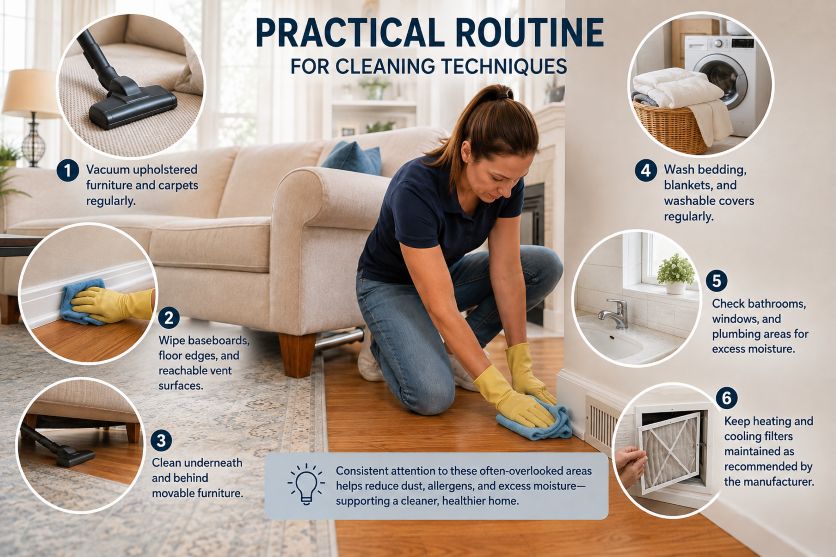
A practical routine can include several overlooked areas:
- Vacuum upholstered furniture and carpets regularly.
- Wipe baseboards, floor edges, and reachable vent surfaces.
- Clean underneath and behind movable furniture.
- Wash bedding, blankets, and washable covers regularly.
- Check bathrooms, windows, and plumbing areas for excess moisture.
- Keep heating and cooling filters maintained as recommended by the manufacturer.
Humidity deserves attention as well. The U.S. Environmental Protection Agency generally recommends indoor relative humidity of about 30 to 50 percent. Lowering excess humidity can make conditions less favorable for dust mites and mold.
A Clean-Looking Room Is Only Part of the Picture
Visible cleanliness gives useful clues about a home’s condition, but it cannot show what has settled inside a sofa, behind a cabinet, or along a rarely disturbed floor edge. Allergens accumulate gradually because homes are active environments. People cook, walk, sleep, open windows, bring items indoors, and share spaces with pets.
A more complete approach focuses on both visible surfaces and the places where particles naturally settle. Regular cleaning, moisture control, washable fabrics, and attention to overlooked areas can reduce buildup over time. The goal does not need to be a perfectly dust-free home. Instead, consistent care can limit the hidden reservoirs that allow common indoor allergens to keep accumulating.